Resources
Jan 25, 2026
Failing to Synchronize Times: A Historical Failure for John F. Kennedy
The 1961 Bay of Pigs invasion of Cuba was one of President John F. Kennedy’s most controversial foreign policy calls, and is often cited as a case study in strategic miscalculation. Believe it or not, during the operation, a distinct failure to synchronize times had huge consequences and led to a failed attack.
The 1961 Bay of Pigs invasion of Cuba was one of President John F. Kennedy’s most controversial foreign policy calls, and is often cited as a case study in strategic miscalculation. Believe it or not, during the operation, a distinct failure to synchronize times had huge consequences and led to a failed attack.
Background
The attempt to overthrow the Communist government in Cuba was planned initially during President Dwight D. Eisenhower’s administration. A plan was devised whereby an invasion (via the Bay of Pigs in Cuba) would be used to foment a popular uprising against the government of the newly triumphant Cuban dictator, Fidel Castro.
The Central Intelligence Agency (CIA) was to support this effort through a covert effort to organize and train expatriate Cubans as a small combat force to invade Cuba. This invasion would then cement a base of operations that would be used to incite a revolt against Castro. The U.S. government devised a complicated cover story, to have the invasion appear as if rich Cuban dissidents were paying for the cost of the invasion themselves. The operation, beset by appearance issues, using complex orders, assuming facts on faulty intelligence, subject to last minute changes, and technical difficulties, made it near-impossible to hide the fact that the United States was a participant.
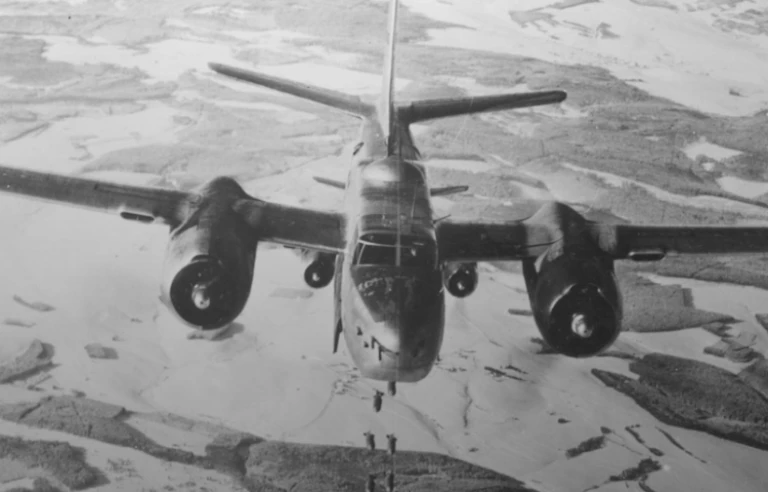
On April 15, 1961, the CIA-backed operation (Read the CIA’s synopsis of the Bay of Pigs here: The Bay of Pigs Invasion – CIA) began when eight B-26 bombers, piloted by expatriate Cubans from the Cuban Expeditionary Force, also known as Brigade 2506, flew from Nicaragua to bomb airfields and associated targets inside Cuba. More air strikes were scheduled for April 16, 1961, to soften up Castro’s forces Castro ahead of the invasion.
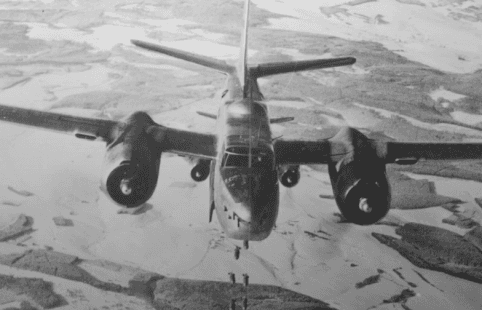
However, on April 16, 1961, President John F. Kennedy cancelled the second planned strike as he wanted the United States to be distanced from the operation. Consequently, without a second strike to wipe out Castro’s air force, the invasion went forward with a landing and the formation of a beachhead at the Bay of Pigs on April 17, 1961. It became very clear early on that the aerial bombings on April 15, 1961, had failed to wipe out the Cuban Air Force or significantly damage its forces, leaving the invasion force to meet a well-armed foe.
Failed Synchronization Means a Failed Mission
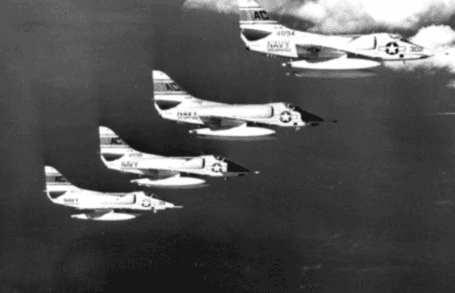
Fighting continued for several days but by April 19, 1961, the invasion force was weak and battered. Success seemed far off. In response, President Kennedy authorized unmarked U.S. fighter jets from the aircraft carrier USS Essex to provide air cover for the invasion force’s B-26 bombers. The B-26 bombers were to fly from bases in Nicaragua to conduct multiple strikes on Castro’s forces and relieve the pressure on the invasion force.
As the fighter jets sat on the deck of The USS Essex awaiting their scheduled take off time, the five B-26 bombers were inbound from Nicaragua to their targets. The B-26 bombers were an hour ahead of schedule. The jets immediately launched after them, but they were unable to reach them in time to protect them. The bombers and U.S. jets failed to rendezvous, and the B-26 bombers had to fly the mission over Cuba without air cover.
The B-26 bomber raid was ineffectual, two were shot down, and the dead included American crewmembers. This was disastrous for the invasion force, and the optics were bad for the United States. This lack of air cover, and mission failure, was painfully avoidable. In short, the CIA and the Pentagon had planned the operation together but failed to take into account the time difference between Nicaragua and Cuba. The failure to synchronize times (as Cuba and Nicaragua were in different time zones) had deadly consequences for the air crews and for a seminal event in history.
Between April 17-20, Castro’s military battled against the expatriates in Brigade 2506, and crushed the invasion. Castro took 1,197 prisoners, and killed (in battle) 89 soldiers of Brigade 2506, downed nine B-26 bombers, and sank numerous vessels. The evidence of U.S. involvement was obvious, and following the defeat (though not publicly acknowledged by the government), the world perceived that President Kennedy, both during the operation and in its aftermath. The military, political, and strategic failures had several underpinnings, but one factor was surely the failed air support, caused by simply ignoring a time difference between two locations.
Listen to what JFK Says About Time Synchronization
In the past few years, several recordings of President Kennedy in the White have been released. Interestingly, there is a recorded telephone conversation (as was done via the White House) between President John F. Kennedy and Attorney General Robert F. Kennedy on March 2, 1963. Listen here as President John F. Kennedy describes that failure to synchronize times:
Conclusion
The failure to synchronize times, whether you are leading an investigation or operating on a much larger geo-political stage, can have deadly, tragic and impactful consequences. Synchronizing times means data accuracy, and when data is being used to make decisions, there can be no room for error.
In more modern times, militaries routinely use standardized time (for example, “Zulu” or UTC) precisely to avoid this sort of time-zone confusion. In addition, most military doctrine emphasizes strict synchronization of watches and timing data for complex maneuvers or strikes. Fortunately these mistakes, in the military world, may be more and more rare as time goes on. For investigators, they are often individually responsible to ensure their timelines are synchronized and accurate so that their findings can be reliable.
TimeScene empowers investigators with intuitive timeline-building tools, robust evidence management, and seamless collaboration features—streamlining every phase of building an investigative timeline. By leveraging TimeScene, you can capture every critical detail, visualize incident progression, and generate comprehensive reports with unprecedented efficiency and accuracy. The ability of TimeScene to do the math for you and accurately calculate your synchronized times is a powerful in ensuring the accuracy of your conclusions. Don’t let valuable insights slip through the cracks—start using TimeScene today and transform how you document, analyze, and resolve fire investigations. Your next investigative breakthrough could be just a timeline away.